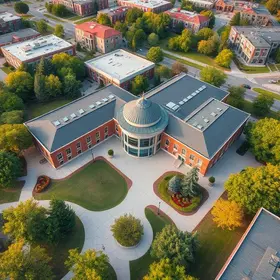
- Milwaukee Area Technical College (MATC) is a publicly supported comprehensive higher education institution committed to increasing the potential and productivity of the people in its district through the delivery of high-quality instruction and programs which are consistent with current and emerging educational and labor market needs. General Education is an integral part of MATC programs which provides the knowledge and conceptual abilities that college-educated adults must have to achieve in occupational skills training and to perform more effectively in the demanding, complex world in which they live.
School Highlights
Milwaukee Area Technical College serves 13,792 students (23% of students are full-time).
The college's student-teacher ratio of 20:1 is lower than the state community college average of 22:1.
Minority enrollment is 66% of the student body (majority Black), which is more than the state average of 35%.
Quick Facts (2026)
- Enrollment: 13,792 students
- In-state tuition: $4,282
- Out-state tuition: $6,171
- Acceptance Rate: 54%
- Student-teacher ratio: 20:1
- Minority enrollment: 66%
- Source: Integrated Postsecondary Education Data System (IPEDS)
Top Rankings
Milwaukee Area Technical College ranks among the top 20% of public schools in Wisconsin for:
Category
Attribute
Diversity
Community Size
School Overview
The teacher population of 689 teachers has declined by 54% over five years.
Milwaukee Area Technical College
(WI) Community College Avg.
Carnegie Classification
Associate's Colleges
Associate's Colleges
Institution Level
At least 2 but less than 4 years
At least 2 but less than 4 years
Institution Control
Public
Public
Year Founded
1912
Colors
Blue and Gold
Total Faculty
689 staff
177 staff
Student Body
The student population of Milwaukee Area Technical College has declined by 31% over five years.
The student-teacher ratio of 20:1 has increased from 10:1 over five years.
The Milwaukee Area Technical College diversity score of 0.75 is more than the state average of 0.00. The school's diversity has stayed relatively flat over five years.
Total Enrollment
13,792 students
3,039 students
Student-Teacher Ratio
20:1
22:1
# Full-Time Students
3,188 students
721 students
# Part-Time Students
10,604 students
2,318 students
# Enrollment Undergraduate
787 students
453 students
# Full-Time Undergraduate Students
3,188 students
721 students
# Part-Time Undergraduate Students
10,604 students
2,318 students
% Asian
6%
4%
% Hispanic
20%
11%
% Black
30%
10%
% White
34%
65%
% Two or more races
4%
3%
% Non Resident races
1%
1%
% Unknown races
5%
5%
Diversity Score
0.75
0.00
College Completion Rate (Students who graduate in less than 4 years)
15%
50%
Average Graduate Earnings (10 Years)
$33,700
$33,500
Tuition and Acceptance Rate
The public in-state tuition of $4,282 is more than the state average of $4,194. The in-state tuition has declined by 10% over four years.
The public out-state tuition of $6,171 is less than the state average of $6,373. The out-state tuition has declined by 10% over four years.
In-State Tuition Fees
$4,282
$4,194
Out-State Tuition Fees
$6,171
$6,373
% Students Receiving Some Financial Aid
74%
74%
Median Debt for Graduates
$13,953
$11,250
Median Debt for Dropouts
$7,481
$5,500
Acceptance Rate
54%
99%
Source: 2025 (or latest year available) Integrated Postsecondary Education Data System (IPEDS) , School Administrators
School Notes
- School Mascot: Stormers
- This four-block campus is located across the street from the Bradley Center. The Downtown Milwaukee Campus features degree, diploma and certificate programs for virtually every interest, and has hundreds of individual classes. Computer labs for doing your coursework and online classes are also available. The Downtown Milwaukee campus currently offers 47 associate degree programs, 27 diploma programs and 46 certificate programs. Community Enrichment Classes offered at Downtown Campus includes courses in American Sign Language 1, Business Organization and Management, Comprehensive Graphic Design, Environmental Science, French 1, Fundamental Photography, History of the Vietnam War Years, Introduction to Theater, Maintaining a Home Computer and Windows XP, Principles of Macroeconomics, Professional Baking and Weight Training/Aerobic Fitness 1.
- Sample of notable school alumni/alumnae:
- Dr. Anthony Cruz, MATC President -
- John Doe, Notable Alumni -
Frequently Asked Questions
How much does Milwaukee Area Technical College cost?
Milwaukee Area Technical College's tuition is approximately $4,282 for In-State students and $6,171 for Out-State students.
What is the acceptance rate of Milwaukee Area Technical College?
The acceptance rate of Milwaukee Area Technical College is 54%, which is lower than the state average of 99%.
Who are famous alumni from Milwaukee Area Technical College?
Milwaukee Area Technical College famous alumni include: Dr. Anthony Cruz, MATC President and John Doe, Notable Alumni.
What is Milwaukee Area Technical College's ranking?
Milwaukee Area Technical College ranks among the top 20% of community college in Wisconsin for: Diversity in US community colleges, Average community college minority breakdown and Largest student body.
In what neighborhood is Milwaukee Area Technical College located?
Milwaukee Area Technical College is located in the Westown neighborhood of Milwaukee, WI.
School Calendar
View the Milwaukee Area Technical College yearly calendar below. Note key dates such as:
Event
Date
Last day of online classes
December 12, 2026 (Saturday)
2027 Spring Break
March 19, 2027 (Friday)
Last day of online classes
May 15, 2027 (Saturday)
Recent Articles

As Four-Year Colleges Enter Short-Term Training, Should You Still Choose a Community College?
As universities expand short-term workforce certificates, learn how community colleges compare on cost, flexibility, employer partnerships, and career outcomes.

What New Federal Aid Rules Mean for Short-Term Training Choices
Learn how new federal financial aid rules affect short-term workforce training programs and what prospective community college students should consider before enrolling.

Childcare, Transportation, and Food Support: Services That Drive Community College Completion
Learn how childcare, transportation, food assistance, and other basic needs services help community college students stay enrolled and graduate.