Community College News

Stay abreast of all the news and reports impacting community colleges. This section covers the latest news stories, from campus protests to Wal-Mart partnerships. Read community college reactions to the latest State of the Union address, identify schools receiving big donations, and analyze the latest laws impacting community colleges and their students.

View the most popular articles in Community College News:

More Sustainability Coming to Community Colleges Nationwide

Updated
|
More Sustainability Coming to Community Colleges Nationwide
Learn about new sustainability programs designed to educate students on green industries and how students can use those studies to build successful, “green” careers.

Going green” has become a mantra for institutions of higher education across the country, particularly community colleges dedicated to training a new generation of workers in industries that need them most. Since much of today’s technology and industry are beginning to revolve around sustainability, raising awareness and providing training in green industries will benefit graduating students and communities and businesses. We have a few examples of community college campuses that are taking green education to the next level.

Danville Area Community College Adding Green Curriculum

Illinois will be seeing more workers trained for green jobs as Danville Area Community College established a new curriculum that emphasizes sustainability and energy efficiency. According to a report at the Commercial-News, the college has received a portion of a three-year $19.4 million grant from the U.S. Department of Labor’s Trade Adjustment Assistance Community College and Career Training Initiative and the Illinois Green Economy Network. In addition, the DACC board recently voted to enter into an agreement between the school and the Illinois Green Economy Network (IGEN) in order to participate in energy-saving projects with the organization.

“It all evolves around dislocated workers and training them for green jobs,” Bruce Rape, Dean of Business and Technology for DACC, told the Commercial-News. Rape described the new hybrid programs in manufacturing and wind energy technology as examples of this partnership that will bring more trained workers into green industries throughout the state. These programs will be done in partnership with
. . .read more

What Can Washington do about the State of Community Colleges?

Updated
|
What Can Washington do about the State of Community Colleges?
President Obama met with community college leaders recently, and we’ll analyze what they discussed and what Washington can do to help make community colleges less expensive and more productive.

When President Obama took office in 2009, he adopted the ambitious goal of raising college graduation rates in America to 60 percent, translating to five million additional college graduates by 2020. Achieving this lofty goal has already proven easier said than done, as education costs continue to increase nationwide. This month, the President called a meeting with college officials, who were invited to the White House to discuss with the President how to make college less expensive and more productive. The task is far from negligible, as many issues must be addressed before Washington will see an improvement in the current state of the community college system.

The Latest Meeting

According to a report at Inside Higher Ed, the latest meeting between President Obama and college leaders was unusual on three counts. First, the meeting was called rather last minute, with college officials scrambling somewhat to make it to Washington for their appointment. Second, the meeting was held behind closed doors, without journalists or others privy to the shared information. Finally, the President attended the meeting instead of a representative from the President’s staff, as is the norm with most meetings.

The Washington meeting was well-attended, with representatives from large state systems, private institutions, and a community college system in attendance. The three representatives from state systems included Nancy Zimpher, chancellor of the State University of New York; Francisco Cigarroa, chancellor of the University of Texas System; and William E. Kirwan, chancellor of the University

. . .read more

Major Changes Coming to Wyoming Community Colleges

Updated
|
Major Changes Coming to Wyoming Community Colleges
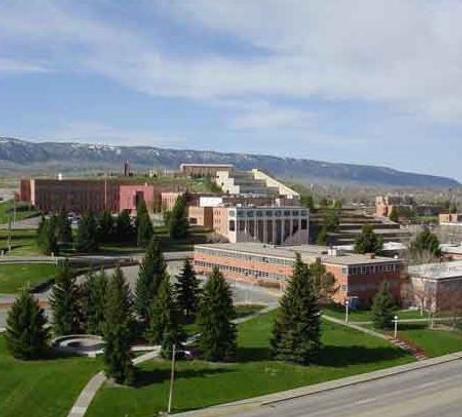
Community college students in Wyoming have two new changes coming to campus: tuition hikes and the first Wyoming Community College Summit. Learn more about what to expect.

The state of Wyoming is demonstrating its commitment to higher education this month with the first-ever community college summit. The summit, sponsored by the Wyoming Association of Community College Trustees, drew educators from around the state to discuss the changing role of community colleges and the best ways to meet student needs in the future. The governor of Wyoming, Matt Mead, was also on hand for the event and addressed the gathering regarding recent decisions made at the state level for community college and the importance of higher education for the state.

Summit Brings Colleges, Businesses Together

The Wyoming Community College Summit brought together all seven of the state’s community colleges and included more than 100 educators from those schools. The summit also saw participation from industry partners and business owners from the state who frequently hired community college graduates for their open positions. KWGN reports that these businessmen and women offered input into what their needs were regarding employees.

“You’ll hear all of them today say, the community colleges are essential to their ability to hire and train productive employees and to grow their businesses,” Steve Bahmer, executive director for the Wyoming Association of Community College Trustees, told KWGN.

The meeting between business owners and community college officials could pave the way for new programs at local community colleges based on the changing needs of businesses in the state. Washington has long touted this type of coordination between the business world and higher education,

. . .read more

New Quality Standards Coming to Community Colleges

Updated
|
New Quality Standards Coming to Community Colleges
Learn about the new accountability standards specifically geared toward community colleges and the organization that created them, the American Association of Community Colleges.

While it is essential to track the progress and effectiveness of higher education in this country, current standards that apply across the board to both two and four-year institutions do not paint a complete picture of the state of postsecondary education today. There are significant differences between four-year universities and two-year community colleges that are not addressed in the standards as they are currently written. In most cases, current assessment standards do community colleges an injustice, providing an inaccurate view of how well these schools educate their students.

The AACC and the VFA

The American Association of Community Colleges (AACC) is hoping to change the view of the community college system through a set of defined assessment standards designed just for them. According to the AACC website, the new Voluntary Framework of Accountability (VFA) is the first national accountability system created just for community colleges, considering their unique student demographics and purpose. The new metrics will initially be tested by 58 community colleges, according to a brief report in the Chronicle of Higher Education, with the hope that other schools will adopt the framework.

The VFA is a three-phase initiative encompassing many aspects of community college success or failure. When the framework is completed, it will include:

  • A technical manual that will offer an overview of measurement calculations
  • A college framework to guide schools in assessing student learning outcomes
  • A blueprint of data collection to provide an assessment model to participating colleges
  • Preliminary results of the
. . .read more

Connecticut College System to Undergo Major Overhaul in Merger

Updated
|
Connecticut College System to Undergo Major Overhaul in Merger
This article probably details a significant restructuring of Connecticut's college system, involving mergers of institutions. It likely discusses the reasons for the overhaul, potential benefits and challenges, and how it will impact students and faculty.

Connecticut College System to Undergo Major Overhaul in Merger

To save money and streamline the higher education process, Connecticut has merged the state’s college system to create a central governance board for 12 community colleges, four universities, and Charter Oak State College – an online college. The only state school that will remain independent under the new structure is the University of Connecticut. While many applaud this change as an effective way to improve the state’s college system overall, others are concerned about exactly how this new merger will impact individual schools with very different missions.

How the Merger Happened and What Students Can Expect

According to a report at Inside Higher Ed, Connecticut state legislators launched the merger in July, when they created the new Board of Regents for Higher Education to oversee the institutions in the state. Two of the primary reasons for the decision were to save money on higher education overall, as well as to coordinate higher education in the state to ensure students received an education that would prepare them for a lucrative and available job in the future.

“The State of Connecticut has to look across higher education,” Gena Glickman, president of Manchester Community College, told Inside Higher Ed. Glickman added that the state needs to determine “whether or not we’re facile enough to meet the needs of each student.”

The new Board of Regents will consist of 19 board members who have not yet been

. . .read more

Recent Articles

As Four-Year Colleges Enter Short-Term Training, Should You Still Choose a Community College?
As universities expand short-term workforce certificates, learn how community colleges compare on cost, flexibility, employer partnerships, and career outcomes.
What New Federal Aid Rules Mean for Short-Term Training Choices
Learn how new federal financial aid rules affect short-term workforce training programs and what prospective community college students should consider before enrolling.
Childcare, Transportation, and Food Support: Services That Drive Community College Completion
Learn how childcare, transportation, food assistance, and other basic needs services help community college students stay enrolled and graduate.