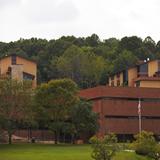
West Virginia University (WVU) Parkersburg is a public institution of higher education, affiliated with West Virginia University, separately accredited by the Higher Learning Commission, and operated by the state of West Virginia. WVU Parkersburg is a higher education center offering community college programs and bachelor's degrees. It is a member institution of the Community and Technical College System of West Virginia. WVU Parkersburg is the only public community college in West Virginia accredited to offer baccalaureate degrees. It is the fifth largest institution of higher education in West Virginia. West Virginia University at Parkersburg provides accessible, life-changing educational opportunities in a safe and supportive environment. Opportunities include career pathways from certificate to baccalaureate, global studies, workplace experience, civic engagement, leadership studies.
School Highlights
West Virginia University at Parkersburg serves 2,728 students (46% of students are full-time).
The college's student-teacher ratio of 25:1 is higher than the state community college average of 22:1.
Minority enrollment is 8% of the student body (majority Hispanic and Black), which is more than the state average of 22%.
Quick Facts (2026)
Enrollment: 2,728 students
In-state tuition: $2,928
Out-state tuition: $10,416
Student-teacher ratio: 25:1
Minority enrollment: 8%
Source: Integrated Postsecondary Education Data System (IPEDS)
Note: Data may not be displayed on any public-facing website or service that replicates or resembles a college search or review portal without prior written permission. See our Terms of Service.
The student population of West Virginia University at Parkersburg has stayed relatively flat over five years.
The student-teacher ratio of 25:1 has increased from 12:1 over five years.
The West Virginia University at Parkersburg diversity score of 0.15 is more than the state average of 0.00. The school's diversity has declined by 20% over five years.
Note: Data may not be displayed on any public-facing website or service that replicates or resembles a college search or review portal without prior written permission. See our Terms of Service.
Note: Data may not be displayed on any public-facing website or service that replicates or resembles a college search or review portal without prior written permission. See our Terms of Service.
Note: Data may not be displayed on any public-facing website or service that replicates or resembles a college search or review portal without prior written permission. See our Terms of Service.
Note: Data may not be displayed on any public-facing website or service that replicates or resembles a college search or review portal without prior written permission. See our Terms of Service.
Note: Data may not be displayed on any public-facing website or service that replicates or resembles a college search or review portal without prior written permission. See our Terms of Service.
Note: Data may not be displayed on any public-facing website or service that replicates or resembles a college search or review portal without prior written permission. See our Terms of Service.
Note: Data may not be displayed on any public-facing website or service that replicates or resembles a college search or review portal without prior written permission. See our Terms of Service.
Note: Data may not be displayed on any public-facing website or service that replicates or resembles a college search or review portal without prior written permission. See our Terms of Service.
Note: Data may not be displayed on any public-facing website or service that replicates or resembles a college search or review portal without prior written permission. See our Terms of Service.
Note: Data may not be displayed on any public-facing website or service that replicates or resembles a college search or review portal without prior written permission. See our Terms of Service.
Note: Data may not be displayed on any public-facing website or service that replicates or resembles a college search or review portal without prior written permission. See our Terms of Service.
College Completion Rate (Students who graduate in 4 years or more than 4 years)
Note: Data may not be displayed on any public-facing website or service that replicates or resembles a college search or review portal without prior written permission. See our Terms of Service.
Note: Data may not be displayed on any public-facing website or service that replicates or resembles a college search or review portal without prior written permission. See our Terms of Service.
Tuition and Acceptance Rate
The public in-state tuition of $2,928 is less than the state average of $3,640. The in-state tuition has declined by 23% over four years.
The public out-state tuition of $10,416 is more than the state average of $8,321. The out-state tuition has grown by 21% over four years.
Note: Data may not be displayed on any public-facing website or service that replicates or resembles a college search or review portal without prior written permission. See our Terms of Service.
Note: Data may not be displayed on any public-facing website or service that replicates or resembles a college search or review portal without prior written permission. See our Terms of Service.
Note: Data may not be displayed on any public-facing website or service that replicates or resembles a college search or review portal without prior written permission. See our Terms of Service.
Note: Data may not be displayed on any public-facing website or service that replicates or resembles a college search or review portal without prior written permission. See our Terms of Service.
Note: Data may not be displayed on any public-facing website or service that replicates or resembles a college search or review portal without prior written permission. See our Terms of Service.
Source: 2025 (or latest year available) Integrated Postsecondary Education Data System (IPEDS)
Frequently Asked Questions
How much does West Virginia University at Parkersburg cost?
West Virginia University at Parkersburg's tuition is approximately $2,928 for In-State students and $10,416 for Out-State students.
What is West Virginia University at Parkersburg's ranking?
West Virginia University at Parkersburg ranks among the top 20% of community college in West Virginia for: Largest student body.
As universities expand short-term workforce certificates, learn how community colleges compare on cost, flexibility, employer partnerships, and career outcomes.
Learn how new federal financial aid rules affect short-term workforce training programs and what prospective community college students should consider before enrolling.
For West Virginia public community colleges, the average tuition is approximately $3,640 per year for in-state students and $8,321 for out-of-state students. For private community colleges, the average yearly tuition is approximately $12,270 per year. Read more about average community college tuition costs across the country.