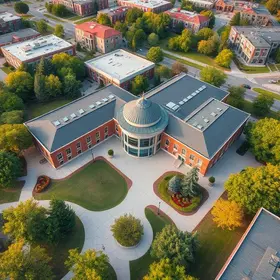
- Founded in 1922, WVJC is located in Morgantown, WV, just a minute’s walk from the West Virginia University campus. We are a small college in a large university community. Our goal is to provide you with the skills you need to begin your career in a short period of time. Through career-focused classes and hands-on training, you can earn an associate degree in months not years.
School Highlights
West Virginia Junior College-Morgantown serves 673 students (100% of students are full-time).
The college's student-teacher ratio of 17:1 is lower than the state community college average of 22:1.
Minority enrollment is 10% of the student body (majority Black), which is less than the state average of 22%.
Quick Facts (2026)
- Enrollment: 673 students
- Private-state tuition: $13,090
- Student-teacher ratio: 17:1
- Minority enrollment: 10%
- Source: Integrated Postsecondary Education Data System (IPEDS)
Top Rankings
West Virginia Junior College-Morgantown ranks among the top 20% of public schools in West Virginia for:
Category
Attribute
School Resources
School Overview
The teacher population of 40 teachers has declined by 16% over five years.
West Virginia Junior College-Morgantown
(WV) Community College Avg.
Carnegie Classification
Associate's Colleges
Baccalaureate/Associate's Colleges
Institution Level
Four or more years
At least 2 but less than 4 years
Institution Control
Private for-profit
Public
Year Founded
1892
Total Faculty
40 staff
30 staff
Student Body
The student population of West Virginia Junior College-Morgantown has declined by 22% over five years.
The student-teacher ratio of 17:1 has increased from 12:1 over five years.
The West Virginia Junior College-Morgantown diversity score of 0.19 is more than the state average of 0.00. The school's diversity has grown by 25% over five years.
Total Enrollment
673 students
809 students
Student-Teacher Ratio
17:1
22:1
# Full-Time Students
673 students
414 students
# Enrollment Undergraduate
607 students
186 students
# Full-Time Undergraduate Students
673 students
414 students
% Asian
1%
1%
% Hispanic
1%
4%
% Black
5%
9%
% White
90%
78%
% Two or more races
2%
3%
% Unknown races
1%
3%
Diversity Score
0.19
0.00
College Completion Rate (Students who graduate in less than 4 years)
77%
52%
Average Graduate Earnings (10 Years)
$22,800
$25,500
Tuition and Acceptance Rate
The private state tuition of $13,090 is more than the state average of $12,270. The private state tuition has declined by 10% over four years.
Private State Tuition Fees
$13,090
$12,270
% Students Receiving Some Financial Aid
100%
91%
Median Debt for Graduates
$8,848
$9,568
Median Debt for Dropouts
$4,230
$4,580
Source: 2025 (or latest year available) Integrated Postsecondary Education Data System (IPEDS)
School Notes
- WVJC's programs are designed to help you finish with a first-rate education, all while keeping the needs of potential employers in mind. The skills you'll learn at WVJC are the skills you'll need to succeed in your career. The college offers programs in Business, Health Care, Technology and Legal field. Along with academic credentials and certifications, our faculty brings industry knowledge to the classroom, helping students understand both theory and real-world reality. WVJC is accredited by the Accrediting Council for Independent Colleges and Schools (ACICS) and award diplomas and academic associate degrees. The school is also approved for the training of veterans.
Frequently Asked Questions
How much does West Virginia Junior College-Morgantown cost?
West Virginia Junior College-Morgantown's private state tuition is approximately $13,090.
What is West Virginia Junior College-Morgantown's ranking?
West Virginia Junior College-Morgantown ranks among the top 20% of community college in West Virginia for: Percent of students receiving financial aid.
Recent Articles

As Four-Year Colleges Enter Short-Term Training, Should You Still Choose a Community College?
As universities expand short-term workforce certificates, learn how community colleges compare on cost, flexibility, employer partnerships, and career outcomes.

What New Federal Aid Rules Mean for Short-Term Training Choices
Learn how new federal financial aid rules affect short-term workforce training programs and what prospective community college students should consider before enrolling.

Childcare, Transportation, and Food Support: Services That Drive Community College Completion
Learn how childcare, transportation, food assistance, and other basic needs services help community college students stay enrolled and graduate.