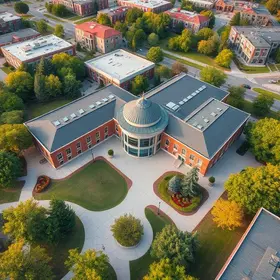
- The West Palm Beach campus offers programs in the areas of professional nursing, business, health care, and legal studies designed to prepare you for career and personal development by offering relevant coursework and practical experiences. This college in the West Palm Beach area boasts a diverse and vibrant student body that thrives on the nurturing atmosphere fostered by faculty and staff. Through small class settings, a supportive learning environment is encouraged by teachers who are focused on the success of their students.
School Highlights
South University-West Palm Beach serves 433 students (89% of students are full-time).
The college's student-teacher ratio of 15:1 is lower than the state community college average of 31:1.
Minority enrollment is 78% of the student body (majority Black), which is more than the state average of 67%.
Quick Facts (2026)
- Enrollment: 433 students
- Private-state tuition: $16,360
- Acceptance Rate: 89%
- Student-teacher ratio: 15:1
- Minority enrollment: 78%
- Source: Integrated Postsecondary Education Data System (IPEDS)
Top Rankings
South University-West Palm Beach ranks among the top 20% of public schools in Florida for:
Category
Attribute
Diversity
School Resources
School Overview
The teacher population of 29 teachers has declined by 54% over five years.
South University-West Palm Beach
(FL) Community College Avg.
Carnegie Classification
Special Focus Four-Year: Other Health Professions Schools
Not applicable, not in Carnegie universe (not accredited or nondegree-granting)
Institution Level
Four or more years
At least 2 but less than 4 years
Institution Control
Private for-profit
Private, for profit
Total Faculty
29 staff
39 staff
School Calendar
Student Body
The student population of South University-West Palm Beach has declined by 48% over five years.
The student-teacher ratio of 15:1 has increased from 10:1 over five years.
The South University-West Palm Beach diversity score of 0.72 is more than the state average of 0.00. The school's diversity has grown by 5% over five years.
Total Enrollment
433 students
1,014 students
Student-Teacher Ratio
15:1
31:1
# Full-Time Students
385 students
559 students
# Part-Time Students
48 students
455 students
# Enrollment Undergraduate
293 students
385 students
# Full-Time Undergraduate Students
204 students
552 students
# Full-Time Graduate Students
181 students
348 students
# Part-Time Undergraduate Students
47 students
553 students
# Part-Time Graduate Students
1 students
85 students
% Asian
5%
3%
% Hispanic
21%
32%
% Black
43%
20%
% White
22%
33%
% Two or more races
2%
4%
% Non Resident races
1%
3%
% Unknown races
5%
5%
Diversity Score
0.72
0.00
College Completion Rate (Students who graduate in 4 years or more than 4 years)
38%
40%
Average Graduate Earnings (10 Years)
$34,100
$28,900
Tuition and Acceptance Rate
The private state tuition of $16,360 is more than the state average of $15,502. The private state tuition has stayed relatively flat over four years.
Private State Tuition Fees
$16,360
$15,502
% Students Receiving Some Financial Aid
100%
85%
Median Debt for Graduates
$25,379
$10,286
Median Debt for Dropouts
$9,500
$5,500
Acceptance Rate
89%
92%
Source: 2025 (or latest year available) Integrated Postsecondary Education Data System (IPEDS) , School Administrators
Frequently Asked Questions
How much does South University-West Palm Beach cost?
South University-West Palm Beach's private state tuition is approximately $16,360.
What schools are South University-West Palm Beach often compared to?
South University-West Palm Beachis often viewed alongside schools like Palm Beach State College by visitors of our site.
What is the acceptance rate of South University-West Palm Beach?
The acceptance rate of South University-West Palm Beach is 89%, which is lower than the state average of 92%.
What is South University-West Palm Beach's ranking?
South University-West Palm Beach ranks among the top 20% of community college in Florida for: Diversity in US community colleges and Percent of students receiving financial aid.
Recent Articles

As Four-Year Colleges Enter Short-Term Training, Should You Still Choose a Community College?
As universities expand short-term workforce certificates, learn how community colleges compare on cost, flexibility, employer partnerships, and career outcomes.

What New Federal Aid Rules Mean for Short-Term Training Choices
Learn how new federal financial aid rules affect short-term workforce training programs and what prospective community college students should consider before enrolling.

Childcare, Transportation, and Food Support: Services That Drive Community College Completion
Learn how childcare, transportation, food assistance, and other basic needs services help community college students stay enrolled and graduate.