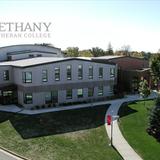
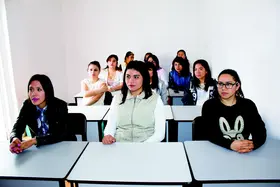
Rasmussen College is dedicated to serving our communities by recognizing the diverse needs of individuals. We encourage personal and professional development through respect, appreciation, and a commitment to general education as a foundation for life-long learning. As an institution of higher learning, the College is committed to preparing students to be active, productive and successful contributors to a global community.
School Highlights
Rasmussen College-Mankato serves 690 students
Minority enrollment is 100% of the student body (majority Black and Hispanic), which is less than the state average of 43%.
Quick Facts (2026)
Enrollment: 690 students
Source: Integrated Postsecondary Education Data System (IPEDS)
The student population of Rasmussen College-Mankato has stayed relatively flat over five years.
The Rasmussen College-Mankato diversity score of 0.00 is equal to the state average of 0.00. The school's diversity has declined by 100% over five years.
Note: Data may not be displayed on any public-facing website or service that replicates or resembles a college search or review portal without prior written permission. See our Terms of Service.
Note: Data may not be displayed on any public-facing website or service that replicates or resembles a college search or review portal without prior written permission. See our Terms of Service.
Note: Data may not be displayed on any public-facing website or service that replicates or resembles a college search or review portal without prior written permission. See our Terms of Service.
Note: Data may not be displayed on any public-facing website or service that replicates or resembles a college search or review portal without prior written permission. See our Terms of Service.
Median Debt for Graduates (Year 2010)
$15,500
$10,000
Median Debt for Dropouts (Year 2010)
$5,587
$5,000
Source: 2025 (or latest year available) Integrated Postsecondary Education Data System (IPEDS)
School Notes
Rasmussen College is a private, for profit, two-year degree
granting College with campuses in Brooklyn Park, Eagan, Mankato,
Minnetonka, St. Cloud and an Online Division. Rasmussen College was
founded in 1900 by Walter Rasmussen. The College offers day,
evening, and online classes and awards Associate of Applied Science
(AAS) degrees as well as diplomas and certificates in a variety of
career areas. Rasmussen College specializes in career-focused
training designed to provide you with maximum job placement
potential. A Rasmussen College education is personalized,
technology-intensive, focused, and innovative. You can graduate in
as little as 9-months or earn a two-year degree. Rasmussen College
is a leader in career education for one reason – our people. Our
success depends on hiring the right people; creative people who
deliver exceptional student services, inspired classroom
instruction, and innovative operational management. Rasmussen
College is accredited by The Higher Learning Commission of the
North Central Association of Colleges & Schools (NCA).
As universities expand short-term workforce certificates, learn how community colleges compare on cost, flexibility, employer partnerships, and career outcomes.
Learn how new federal financial aid rules affect short-term workforce training programs and what prospective community college students should consider before enrolling.