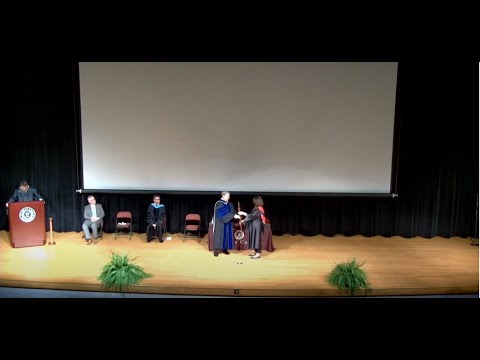
- Ozarka College operates as a two-year public post-secondary institution offering associate level degrees and technical certificates as well as basic adult education and workplace skills training.
School Highlights
Ozarka College serves 1,069 students (39% of students are full-time).
The college's student-teacher ratio of 20:1 is lower than the state community college average of 22:1.
Minority enrollment is 6% of the student body (majority Hispanic and Black), which is more than the state average of 38%.
Quick Facts (2026)
- Enrollment: 1,069 students
- In-state tuition: $2,680
- Out-state tuition: $5,032
- Student-teacher ratio: 20:1
- Minority enrollment: 6%
- Source: Integrated Postsecondary Education Data System (IPEDS)
School Overview
The teacher population of 54 teachers has declined by 54% over five years.
Ozarka College
(AR) Community College Avg.
Carnegie Classification
Associate's Colleges
Associate's Colleges
Institution Level
At least 2 but less than 4 years
At least 2 but less than 4 years
Institution Control
Public
Public
Total Faculty
54 staff
61 staff
School Calendar
Student Body
The student population of Ozarka College has declined by 20% over five years.
The student-teacher ratio of 20:1 has increased from 10:1 over five years.
The Ozarka College diversity score of 0.12 is more than the state average of 0.00. The school's diversity has grown by 54% over five years.
Total Enrollment
1,069 students
1,285 students
Student-Teacher Ratio
20:1
22:1
# Full-Time Students
421 students
440 students
# Part-Time Students
648 students
845 students
# Enrollment Undergraduate
645 students
544 students
# Full-Time Undergraduate Students
421 students
440 students
# Part-Time Undergraduate Students
648 students
845 students
Total Dormitory Capacity
15 students
160 students
% American Indian/Alaskan
1%
1%
% Asian
1%
2%
% Hispanic
3%
12%
% Black
1%
17%
% White
94%
62%
Diversity Score
0.12
0.00
College Completion Rate (Students who graduate in less than 4 years)
47%
38%
Average Graduate Earnings (10 Years)
$27,900
$27,900
Tuition and Acceptance Rate
The public in-state tuition of $2,680 is less than the state average of $2,994. The in-state tuition has declined by 12% over four years.
The public out-state tuition of $5,032 is more than the state average of $4,750. The out-state tuition has declined by 8% over four years.
In-State Tuition Fees
$2,680
$2,994
Out-State Tuition Fees
$5,032
$4,750
Tuition Notes
$124.00 per credit (in-state)
% Students Receiving Some Financial Aid
88%
92%
Median Debt for Graduates
$9,500
$9,673
Median Debt for Dropouts
$6,025
$5,300
Source: 2025 (or latest year available) Integrated Postsecondary Education Data System (IPEDS) , School Administrators
School Notes
- Ozarka College has consistently maintained state-of-the-art technology to be made available to students. The Learning Lab located in the Miller Education Complex is open to all regularly enrolled Ozarka College students (as well as to interested members of the community when space is available). Students may access software used in many courses to complete homework assignments or projects. In addition, interactive tutorials for college-level courses and GED preparation are available. Trio/Student Support Services Program provides on-campus group and peer tutoring, workshops, computer-aided instruction and individual counseling. In addition, Trio schedules visits to four year colleges and universities for students interested in transferring to pursue additional coursework beyond Ozarka. Cultural events are also offered through this federally-funded program. Ozarka College is accredited by the North Central Association of Colleges and Schools. With a low student-faculty ratio, Ozarka prides itself on the quality of education and service available to individual students.
Frequently Asked Questions
How much does Ozarka College cost?
Ozarka College's tuition is approximately $2,680 for In-State students and $5,032 for Out-State students.
Nearby Schools
The nearest community college to Ozarka College is University of Arkansas Community College-Batesville (23.9 miles away)
School
Location
Miles
Quick Facts
2005 White Drive
Batesville, AR 72503
(870) 612-2000
Batesville, AR 72503
(870) 612-2000
23.9 miles
Enrollment: 1,192 students Student-teacher ratio: 21:1 In-state tuition: $2,562 Out-state tuition: $3,942 Minority enrollment: 19%
1600 South College Street
Mountain Home, AR 72653
(870) 508-6100
Mountain Home, AR 72653
(870) 508-6100
32.7 miles
Enrollment: 1,315 students Student-teacher ratio: 30:1 In-state tuition: $2,750 Out-state tuition: $4,200 Minority enrollment: 8%
128 Garfield Avenue
West Plains, MO 65775
(417) 255-7255
West Plains, MO 65775
(417) 255-7255
46.7 miles
Enrollment: 1,919 students Student-teacher ratio: 31:1 In-state tuition: $4,020 Out-state tuition: $7,440 Minority enrollment: 18%
7648 Victory Blvd
Newport, AR 72112
(870) 512-7800
Newport, AR 72112
(870) 512-7800
48.9 miles
Enrollment: 1,868 students Student-teacher ratio: 22:1 Acceptance rate: 84% In-state tuition: $2,520 Out-state tuition: $3,888 Minority enrollment: 33%
1410 Hwy 304 East
Pocahontas, AR 72455
(870) 248-4000
Pocahontas, AR 72455
(870) 248-4000
54.4 miles
Enrollment: 1,705 students Student-teacher ratio: 24:1 In-state tuition: $2,688 Out-state tuition: $5,232 Minority enrollment: 11%
Recent Articles

As Four-Year Colleges Enter Short-Term Training, Should You Still Choose a Community College?
As universities expand short-term workforce certificates, learn how community colleges compare on cost, flexibility, employer partnerships, and career outcomes.

What New Federal Aid Rules Mean for Short-Term Training Choices
Learn how new federal financial aid rules affect short-term workforce training programs and what prospective community college students should consider before enrolling.

Childcare, Transportation, and Food Support: Services That Drive Community College Completion
Learn how childcare, transportation, food assistance, and other basic needs services help community college students stay enrolled and graduate.