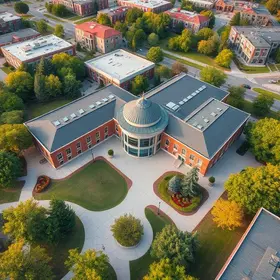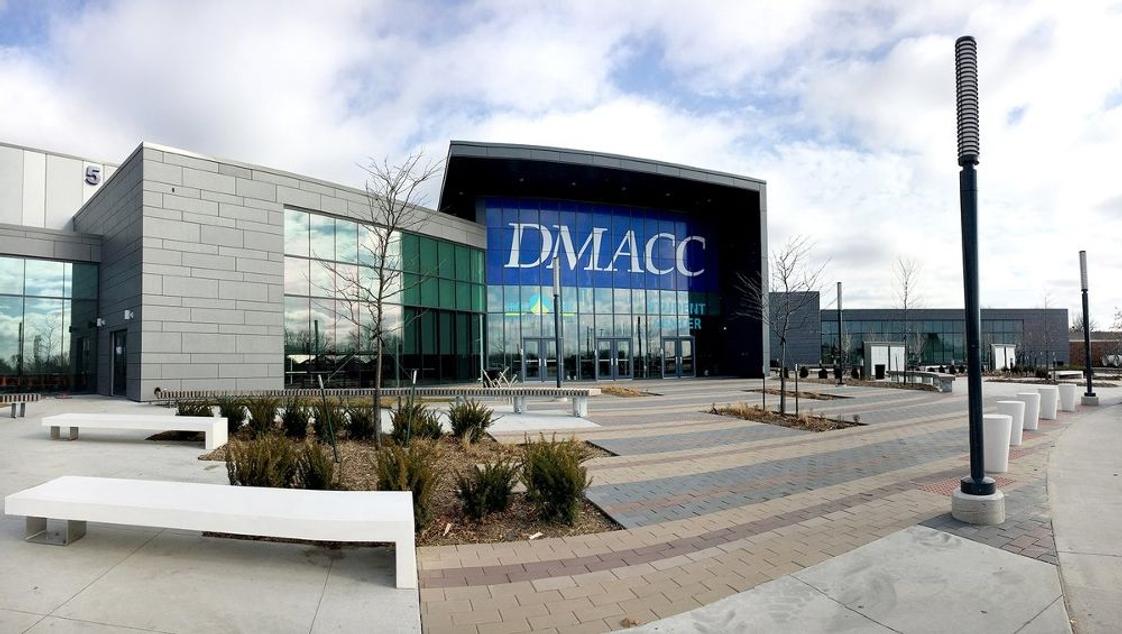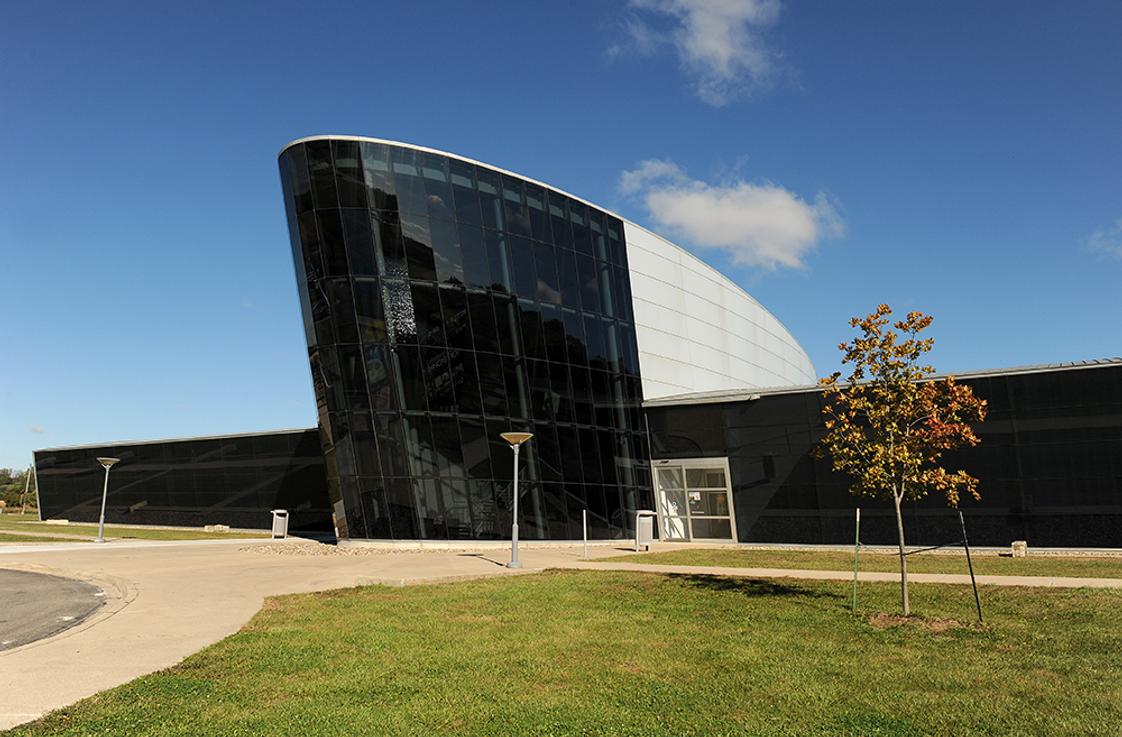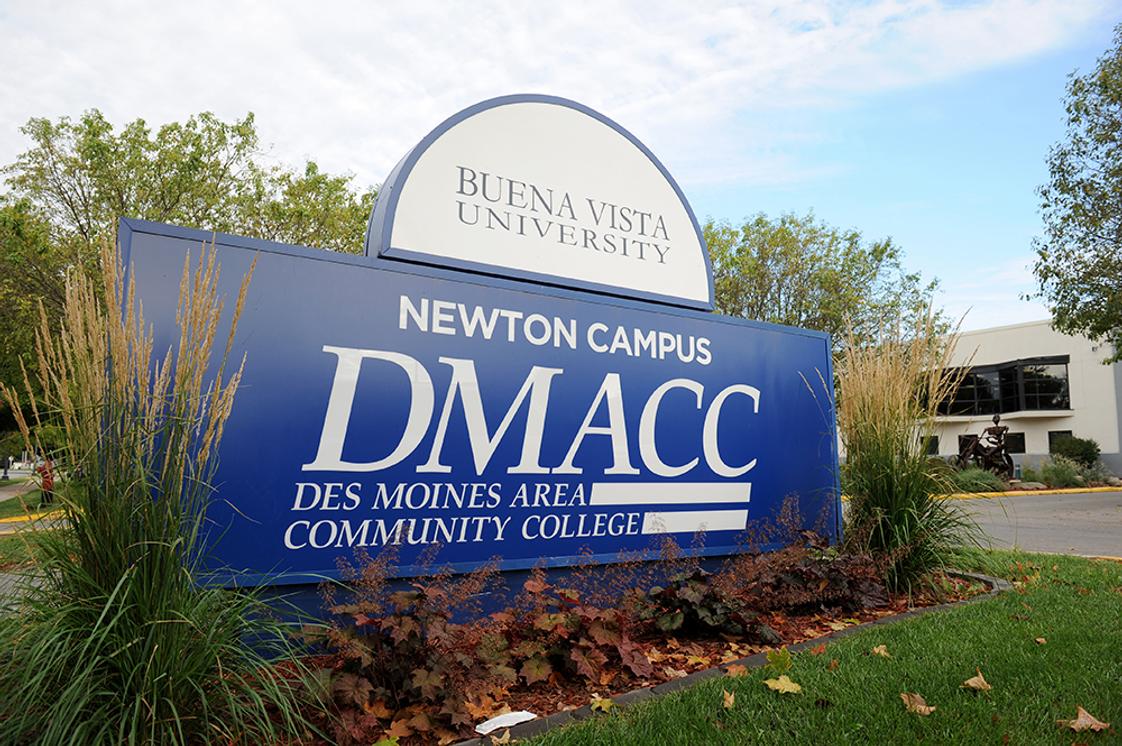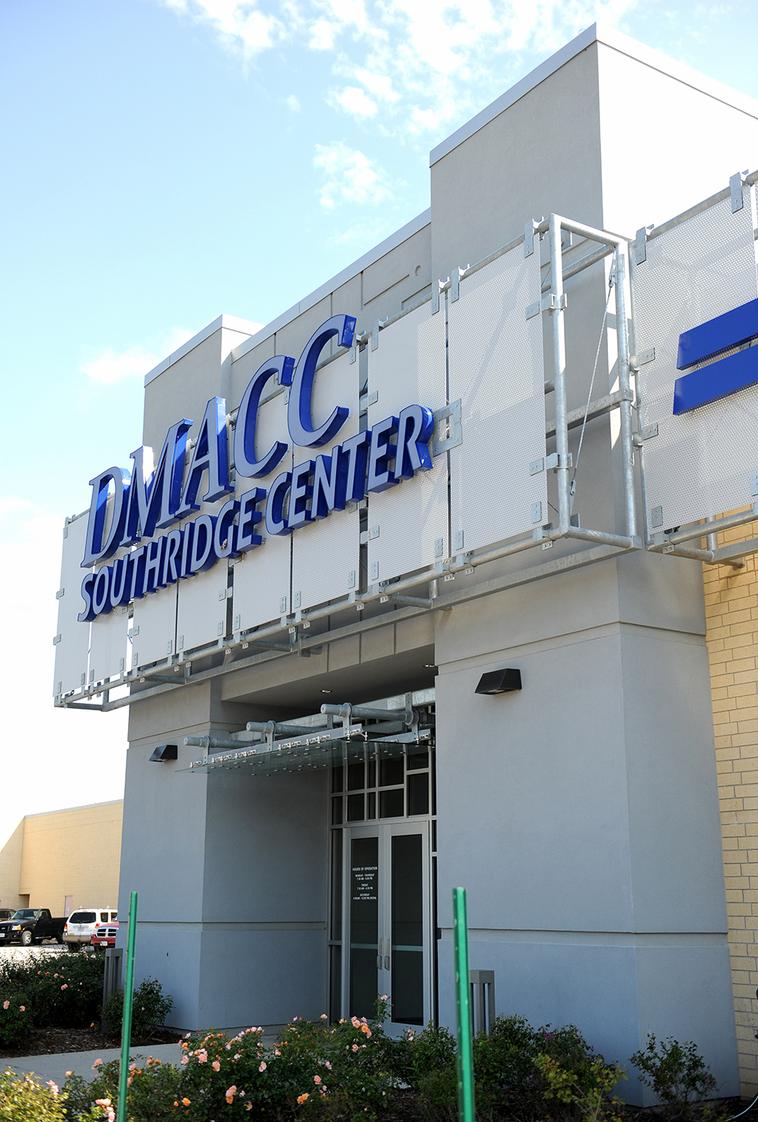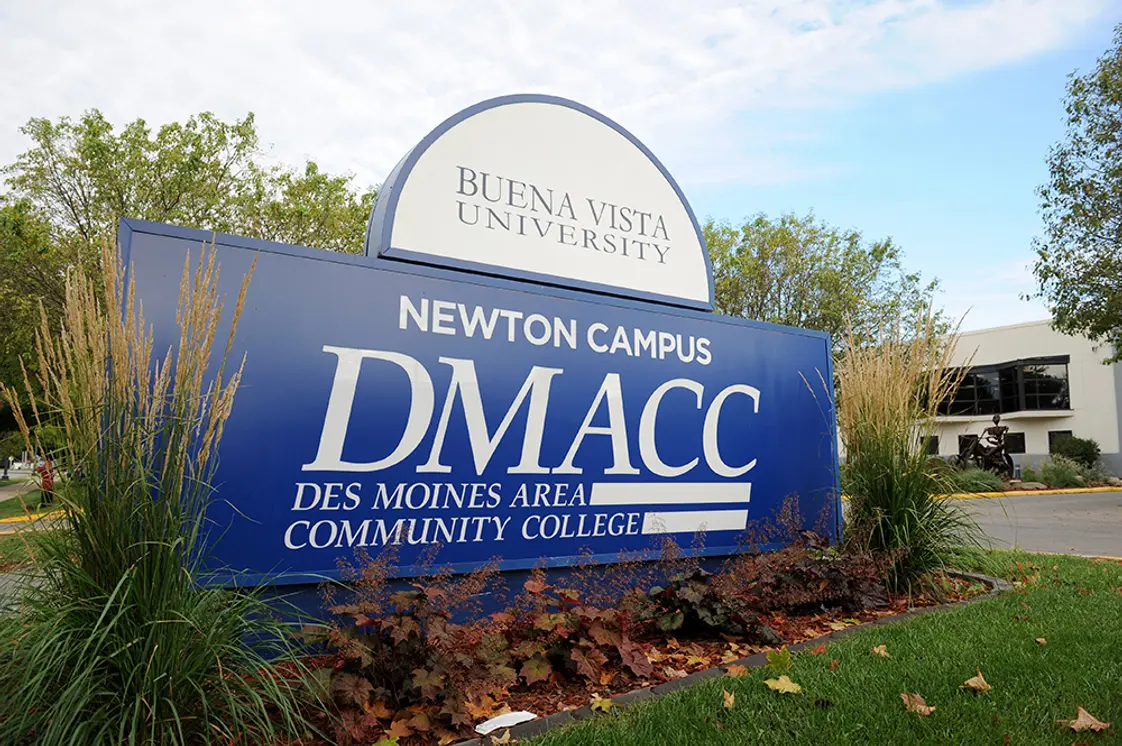



- DMACC is dedicated to your personal and professional success through our small class sizes, free tutoring in our academic achievement centers and the flexibility of our growing list of new Signature Series online classes. Maybe the best part: DMACC offers this outstanding education for thousands of dollars less than you will find anywhere else. It's good to know that a higher education is still affordable.
- Say "I Choose DMACC!" today!
School Highlights
Des Moines Area Community College serves 23,697 students (24% of students are full-time).
The college's student-teacher ratio of 41:1 is higher than the state community college average of 30:1.
Minority enrollment is 33% of the student body (majority Hispanic and Black), which is more than the state average of 32%.
Quick Facts (2026)
- Enrollment: 23,697 students
- In-state tuition: $156
- Out-state tuition: $312
- Student-teacher ratio: 41:1
- Minority enrollment: 33%
- Source: Verified school update
Top Rankings
Des Moines Area Community College ranks among the top 20% of public schools in Iowa for:
Category
Attribute
Community Size
School Overview
The teacher population of 578 teachers has declined by 48% over five years.
Des Moines Area Community College
(IA) Community College Avg.
Carnegie Classification
Associate's Colleges
Not applicable, not in Carnegie universe (not accredited or nondegree-granting)
Institution Level
At least 2 but less than 4 years
At least 2 but less than 4 years
Institution Control
Public
Private not-for-profit
Total Faculty
578 staff
18 staff
Student Body
The student population of Des Moines Area Community College has stayed relatively flat over five years.
The student-teacher ratio of 41:1 has increased from 21:1 over five years.
The Des Moines Area Community College diversity score of 0.53 is more than the state average of 0.00. The school's diversity has grown by 15% over five years.
Total Enrollment
23,697 students
1,532 students
Student-Teacher Ratio
41:1
30:1
# Full-Time Students
5,770 students
165 students
# Part-Time Students
17,927 students
1,367 students
# Enrollment Undergraduate
136 students
23 students
# Full-Time Undergraduate Students
5,770 students
165 students
# Part-Time Undergraduate Students
17,927 students
1,466 students
% Asian
4%
3%
% Hispanic
9%
9%
% Black
7%
7%
% White
67%
68%
% Two or more races
2%
3%
% Unknown races
10%
9%
Diversity Score
0.53
0.00
College Completion Rate (Students who graduate in less than 4 years)
34%
55%
Average Graduate Earnings (10 Years)
$36,200
$32,700
Tuition and Acceptance Rate
The public in-state tuition of $156 is less than the state average of $4,331. The in-state tuition has declined by 97% over four years.
The public out-state tuition of $312 is less than the state average of $4,920. The out-state tuition has declined by 97% over four years.
In-State Tuition Fees
$156
$4,331
Out-State Tuition Fees
$312
$4,920
Tuition Notes
Face-to-Face ClassesIowa Resident Tuition: $156.00 per credit hourNon-Resident Tuition: $312.00 per credit hourOnline ClassesOnline Class Tuition: $186.00* per credit hourWeb-Blended Tuition:? $171.00** per credit hourOnline Tuition calculation = $156.00 tuition + $30 online fee per credit hour.**Web-Blended Tuition calculation = $156.00 tuition + $15 web-blended fee per credit hour.
% Students Receiving Some Financial Aid
69%
88%
Median Debt for Graduates
$10,730
$11,250
Median Debt for Dropouts
$5,500
$5,500
Source: 2025 (or latest year available) Integrated Postsecondary Education Data System (IPEDS) , School Administrators
School Notes
- Des Moines Area Community College is a publicly supported two-year institution serving the Des Moines metropolitan area and surrounding counties. The College District includes all or major portions of Audubon, Boone, Carroll, Dallas, Guthrie, Jasper, Madison, Marion, Polk, Story and Warren counties and minor parts of 11 adjacent counties. Des Moines Area Community College was officially created March 18, 1966, and was designated as Merged Area XI. A nine member Board of Directors was elected and formally installed that same year. The College was established after extensive studies had indicated the need for such an institution. Leading figures throughout the College's District combined their talents and resources to assure proper planning for the College. Des Moines Area Community College anticipates student and community needs, providing quality, learner-centered higher education and workforce development. Our programs and services encourage and develop career success, cultural understanding, social enrichment and life-long learning. We accomplish our mission through a process of responsible use of resources and continuous improvement. DMACC is the largest two-year college program in Iowa. DMACC has over 220 career programs leading to high demand jobs. It's also a great way to complete the first two years of a college education. Students who earn their Associate of Arts degree at DMACC have been very successful after transferring to other colleges and universities. Des Moines Area Community College is accredited by the North Central Association of Colleges and Schools. The College is also approved by the Iowa State Department of Education and the Iowa Board of Regents.
Frequently Asked Questions
How much does Des Moines Area Community College cost?
Des Moines Area Community College's tuition is approximately $156 for In-State students and $312 for Out-State students.
What is Des Moines Area Community College's ranking?
Des Moines Area Community College ranks among the top 20% of community college in Iowa for: Largest student body.
Recent Articles

As Four-Year Colleges Enter Short-Term Training, Should You Still Choose a Community College?
As universities expand short-term workforce certificates, learn how community colleges compare on cost, flexibility, employer partnerships, and career outcomes.

What New Federal Aid Rules Mean for Short-Term Training Choices
Learn how new federal financial aid rules affect short-term workforce training programs and what prospective community college students should consider before enrolling.
Childcare, Transportation, and Food Support: Services That Drive Community College Completion
Learn how childcare, transportation, food assistance, and other basic needs services help community college students stay enrolled and graduate.