Updated
|
Campus Living Options for Community College Students
Learn about the increasing number of campus living options for community college students.

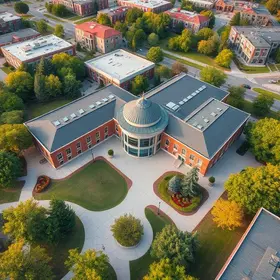
While most community colleges were traditionally designed to provide local students convenient access to higher education, many institutions are now expanding their campus living options. Across the United States, a growing number of community colleges are developing dormitories and student housing to enhance academic success, social engagement, and access for a broader range of students.

This shift reflects changing student needs in 2026, including rising transportation costs, increased demand for flexible living arrangements, and a stronger focus on student retention and completion.

Benefits of Living Near Campus

As students seek increasingly convenient accommodations, new community college dormitories are attracting a wider and more diverse student population. Many institutions are building housing not only as a recruitment tool, but also as a way to better support their existing student body.

Students who live on or near campus often report several academic and lifestyle advantages. Proximity to classrooms, libraries, and tutoring centers can contribute to improved academic performance. Recent research from the Community College Research Center indicates that students who are more engaged on campus, including those living nearby, are more likely to persist and complete their programs.

In addition, living close to campus reduces commuting time and transportation expenses. With fuel and public transit costs remaining a concern in many regions, this financial benefit has become increasingly significant.

Students also benefit from easier access to support services, including advising, study groups, and peer networks. These resources are particularly valuable for first-year and nontraditional students adjusting to college


. . .read more

Establishing Good Relationships with Instructors

Updated
|
Establishing Good Relationships with Instructors
Learn how to establish good relationships with community college instructors, and how they can be helpful for your academics.

As class sizes across the country continue to rise, many community college students struggle to connect with instructors. Students must strive to build positive working relationships with instructors to combat some of the potential issues of over-sized classes or to even further benefit from smaller classes.

Building positive student-instructor relationships allows students to gain more personal assistance, work through the course material more effectively, and ultimately perform better.

Benefits of Building Positive and Professional Relationships with Instructors

Improved Course Work

One of the primary benefits of building effective relationships with an instructor is a student’s ability to receive more specific feedback and instruction, whether they are taking prerequisite or elective courses. Students who establish positive professional relationships with instructors can obtain more insight into creating a particular course plan for increased progress.

As Jacobson suggests, students should meet with instructors after large assignments or tests are returned. A “mini-conference,” or meeting with an instructor, allows both parties to focus on the finished final assignment, essay, or test. With this idea, Jacobson also asserts, “this approach may seem time-consuming, it rarely becomes a daunting process […] Once some of (students) major […] problems have been identified and correction methods have been explained, most of the students begin to use the specific information they have received to self-monitor their (work).”

Additionally, according to Jacobson, the more students meet with instructors early in the course, the less time students will need to meet with an instructor later – as you

. . .read more

Foreign Language Courses & Careers

Updated
|
Foreign Language Courses & Careers
Learn about the foreign language courses and career opportunities offered by community colleges.

As a rising number of careers now prefer, and often require, the ability to speak multiple languages, more community colleges are integrating career-based language programs for students. These programs are designed to teach students the necessary skills and abilities to communicate and compete in the global workforce after graduation.

Community Colleges: Foreign Language Programs and Career Preparation

The Focus of Foreign Language Studies

Foreign language studies incorporate a variety of elements, skills, and disciplines of various modes of communication. As Yakima Valley Community College, located in Washington, supports, “all courses emphasize oral language acquisition. The primary goals are to have students speak and understand the spoken language.”

Most community colleges, such as Yakima, additionally include courses in conversational practices, as well as a diverse mix of academic classes with various focus topics. In addition to teaching students the language, Yakima also teaches students about a language’s cultural history and social background. As students embark on the cultural studies of their language, opportunities for internships, studying abroad, and other interactive programs are highly rated and recommended.

Durham Technical Community College

Located in Durham, North Carolina, Durham Technical Community College is another institution providing students with extensive foreign language courses to provide support for potential careers. Durham offers courses in Arabic, Chinese, French, German, Italian, Korean, Portuguese, Russian, and Spanish.

Arapahoe Community College

Arapahoe Community College, located in Littleton Colorado, is one of the many community

. . .read more

Recession-Proof Careers for Community College Students

Updated
|
Recession-Proof Careers for Community College Students
Learn about several careers for community college students that are likely to weather an economic downturn.

While many recent graduates may struggle to find sustainable work amidst a declining economy, community college students are discovering new “recession-proof” career paths that are both reliable and lucrative, despite economic hardships.

As Emily Gersema of The Arizona Republic argues, community colleges are becoming increasingly aware of job market demands since “employers come to them to set up programs tailored to their staffing needs.” Careers in various industries are proving to be strong and sustainable options for community college students after graduation.

Health Care Careers

According to research supported by Kiplinger, a renounced financial and economic forecasting company, healthcare is one the top options for students looking for a sustainable educational path or for recent graduates seeking employment: “Many of the nation's fastest-growing careers are in the healthcare industry, according to the Bureau of Labor Statistics.”

As the population age continues to rise, careers in health care should remain reliable and strong, as the demand is projected for years to come. Specific healthcare jobs for community college students include careers in the field of nursing, physical therapy, nursing home aid, physician assistant, and many more.

And in specifically analyzing the rising demands, Gersema further explains, “Healthcare needs…continue to rise. Clinics and dental offices are tapping programs such as the dental-hygienist program at Mesa Community College for workers.” Paired with this, jobs are also on the rise for individuals who are fluent in global languages[C1], particularly Spanish. “Demand is increasing for healthcare workers who speak Spanish

. . .read more

Studying Abroad During Community College

Updated
|
Studying Abroad During Community College
Learn about the benefits of studying abroad during community college.

Studying Abroad During Community College

As more employers are seeking diverse candidates with global experience, community colleges across the country are now providing students with the opportunity to study abroad. Abroad programs allow students to take courses overseas so students can explore the world while still maintaining a focus on their degree program.

Benefits of Studying Abroad

While each community college offers different programs, the Institute of International Education (IIE) is an organization that currently works with community colleges to promote diverse program offerings for students. As the IIE describes, “the role of study abroad revolves predominately around a) providing opportunities for learning, cultural development, and career education; b) fostering understanding and building global partnerships, and c) preparing students to take their place in an increasingly global community and world citizenship.”

Also, according to Transitions Abroad, students not only benefit academically and professionally but also personally as well. According to survey results, “97 percent said studying abroad served as a catalyst for increased maturity, 96 percent reported increased self-confidence, 89 percent said that it enabled them to tolerate ambiguity, and 95 percent stated that it has had a lasting impact on their worldview.”

Paired with this, students reported that studying abroad led to long-lasting friendships with both United States and global students, as “more than half the respondents are still in contact with U.S. friends met while studying abroad, and 73 percent said the experience continues to influence the decisions they

. . .read more

Recent Articles

As Four-Year Colleges Enter Short-Term Training, Should You Still Choose a Community College?
As universities expand short-term workforce certificates, learn how community colleges compare on cost, flexibility, employer partnerships, and career outcomes.
What New Federal Aid Rules Mean for Short-Term Training Choices
Learn how new federal financial aid rules affect short-term workforce training programs and what prospective community college students should consider before enrolling.
Childcare, Transportation, and Food Support: Services That Drive Community College Completion
Learn how childcare, transportation, food assistance, and other basic needs services help community college students stay enrolled and graduate.