Updated
|
How to Find the Best Community College for Your Unique Hearing Needs
If you have specific hearing needs, finding a supportive community college campus is critical. Learn about what to look for in a community college and what programs across the nation are providing innovative resources to those with hearing impairments.

Approximately 7 percent of Americans cope with various degrees of hearing loss, according to The New School. While most community colleges offer sign language courses, many students who require hearing assistance need more resources. Students who are hearing impaired often need access to a sign language interpreter for courses and require accommodations for oral or written assignments.

To help hearing-impaired students maximize their academic opportunities, community colleges are working to diversify their hearing services. With new forms of technology, experimental instructional courses, and additional venues for support, students who are hearing impaired can access an incredible cache of tools at a number of community college campuses across the country.

This video offers some strategies for teachers of hearing-impaired students.

What Hearing Support Services Should a Community College Offer?

According to The New School, an institution dedicated to providing classes for hearing impaired students, individuals who require hearing assistance may need a range of tools and support systems. As each individual student, regardless of hearing ability, has his or her own strengths, struggles, and needs, the best community colleges will provide a diverse array of resources for individual guidance. Examples of tools that may benefit hearing-impaired students include:

  • Sign language interpreting services in the classroom
  • Access to class materials and notes in advance so interpreters and/or students can prepare for upcoming lessons
  • Seating accommodations to place students who have a minor ability to hear

. . .read more

3 Reasons Why Top Universities are Recruiting Community College Students

Updated
|
3 Reasons Why Top Universities are Recruiting Community College Students
Learn about the growing trend amongst four-year universities to recruit from community college campuses. Enjoy an academic head start and a competitive edge against other applicants by starting first at community college.

Hey there, future college students! Did you know community colleges are becoming a secret weapon for getting into top universities? It's true! While these two-year schools started focusing on job skills, they've become a launchpad for students aiming for bachelor's degrees and beyond. Here's the scoop: big universities are catching on that community college success is a better predictor of how you'll do in a four-year program than high school grades or SAT scores. So if you're dreaming of attending a prestigious university but worried about the competition, consider starting at your local community college. Not only could it give your application a serious boost, but you'll also save a ton of money, enjoy smaller classes, and have a smoother transition to university life. It's a win-win situation that more and more savvy students are taking advantage of!

Why are Universities Seeking Community College Students?

Proof of Student Success and Excellence

While many students seeking affordable, convenient, and program-specific courses often pursue degree pathways through community colleges, many higher education leaders are striving to shift motivated community college students into university education.

A central catalyst for this new focus on community college applicants is most notably based upon studies that reveal the soaring success rates among students who transfer from a two-year institution to a four-year school. As the Longview News-Journal reveals, “Studies show that students who complete community college course work before going to four-year institutions tend to graduate at a higher rate than those who begin

. . .read more

Careers: Dance

Updated
|
Careers: Dance
Learn about how you can pursue a rewarding dance career by starting at your local community college. Whether you are a dancer or aspire to be a choreographer, your community college may be a fantastic starting point.

With beautiful choreography, artful costumes, enthralling music, and captivating performances, the art of dance can provide community college students with various career opportunities. Whether you are interested in learning about the techniques of production and choreography or hoping to hone your dancing skills, community colleges are an excellent venue of opportunity.

Careers in Dance

Due to the myriad of facets involved in a single dance performance, there are many types of jobs in the dance industry. Foremost, for students interested in pursuing professional dancing through their local community college courses, professional dancers are typically trained to perform within various genres. Popular dancing genres include folk, ethnic, tap, hip-hop, jazz, ballet, and regional.

Yet, since dancing can often be stressful to one’s body, many dancers cease their professional performances as they reach their early to mid-30s. Despite this relatively short performance window, experienced dancers can continue to work in this field by pursuing one of the many related performance positions.

For individuals with a background in dance, choreography is a popular long-term profession. As Career Overview explains, dancers are typically paired with a choreographer, who helps the dancers to create, perfect, and learn new forms of existing dances. Choreographers train dancers at rehearsals and during practice and are also commonly involved in dancing auditions.

Data from a 2002 study shows that the median income earned by choreographers is generally around $30,000, although the top-earning choreographers reported an annual salary of almost $60,000.

In addition to careers in professional

. . .read more

Teacher Training: Autism Teaching Certification

Updated
|
Teacher Training: Autism Teaching Certification
Given the increasing number of diagnosed autistic children, the demand for autistic specialists grows as well. Learn about how you can specialize in autistic education by taking courses at your local community college.

According to the Autism Society of America (ASA), the number of diagnosed autistic children in the United States has been growing significantly in the last several decades.

In fact, as reported by the Centers for Disease Control and Prevention, their 2007 study confirmed that approximately 1 out of every 150 children will be diagnosed with autism. This rise in cases adds to the nearly 1.5 million Americans who are currently coping with the effects of autism spectrum disorder.

Due to the rising need for autism support, community colleges have created a variety of autism training programs to help students specialize in helping autistic children. As ASA supports, “The spotlight shown on autism as a result of the prevalence increase opens opportunities for the nation to consider how to serve these families facing a lifetime of support for their children.”

What is Autism?

Autism spectrum disorder is a highly complex developmental disability that typically influences how a child thinks, behaves, and interprets various interactions. Labeled as a “spectrum disorder,” autism has an incredibly vast range of symptoms and signals.

Typically, children with autism will begin to show signs of this disorder within the first three years of their lives. Since autism is not a short term condition, but a lifetime component of a child’s life and thinking process, there is no quick cure for this disorder.

Furthermore, since scientists are unsure as to what the exact cause of autism really is, experts assert that parents with autistic

. . .read more

How to Go Organic at Community College

Updated
|
How to Go Organic at Community College
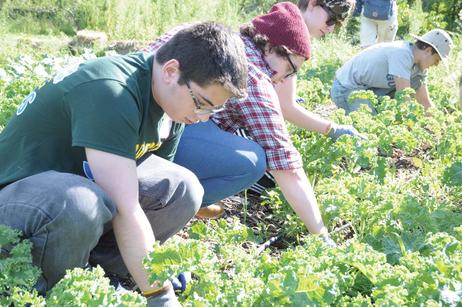
Discover how community colleges continue to teach organic gardening through hands-on courses that promote sustainability, healthy eating, and environmentally responsible growing practices.

While organic foods are often perceived as healthier than conventionally grown alternatives, organic options also tend to be more expensive. To help students become healthier while saving money, a growing number of community colleges continue to offer organic gardening classes and sustainable agriculture programs.

Interest in home gardening has remained strong in 2026 as consumers seek healthier food options, lower grocery bills, and environmentally friendly growing practices. Many community colleges have expanded their continuing education and horticulture offerings to include sustainable gardening, composting, native plants, urban agriculture, and food production.

Students interested in other unique community college learning experiences may also enjoy Community College Review's articles on Learn Homesteading Skills at Your Local Community College, and Fun & Elective Classes.

The Benefits of Organic Gardening

As consumer interest in healthy eating continues to grow, more Americans are embracing the many benefits of organic foods. While research has evolved since this article was originally published, organizations such as the U.S. Department of Agriculture note that organic farming emphasizes soil health, biodiversity, and the avoidance of most synthetic pesticides and fertilizers. Research also suggests that organic produce may contain higher levels of certain antioxidant compounds, although nutritional differences can vary depending on the crop and growing conditions.

This video describes the benefits of organic gardening.

Since conventional farming and gardening methods often utilize fertilizers and synthetic chemicals to boost crop

. . .read more

Recent Articles

As Four-Year Colleges Enter Short-Term Training, Should You Still Choose a Community College?
As universities expand short-term workforce certificates, learn how community colleges compare on cost, flexibility, employer partnerships, and career outcomes.
What New Federal Aid Rules Mean for Short-Term Training Choices
Learn how new federal financial aid rules affect short-term workforce training programs and what prospective community college students should consider before enrolling.
Childcare, Transportation, and Food Support: Services That Drive Community College Completion
Learn how childcare, transportation, food assistance, and other basic needs services help community college students stay enrolled and graduate.