Updated
|
Wiser and Older: The Movement to Enroll Community College Students Over the Age of 50
Who says college is just for the 18 - 22 year old crowd? In fact, more community colleges are recruiting students over the age of 50 - and for good reason!

The current economic conditions of this country have resulted in more adults working well into their retirement years. Unfortunately, not every individual in this demographic is properly prepared to find success in a career in the later years of life. To help this sector of our population become more marketable and to utilize the resources of our older population to the fullest, the Plus 50 Initiative was developed. This initiative is designed to help Americans over the age of 50 train for new careers and piggyback on skills they already have to make them even more attractive in today's marketplace.

Purpose of the Plus 50 Program

The Plus 50 Initiative was started by the American Association of Community Colleges (AACC) to help adults in this age bracket find the best community college programs for their needs. The initiative, according to the website, provides benchmarks and showcases programs around the country that specifically cater to the over-50 learner. These campus programs are used for everything from preparing seniors for volunteer opportunities to offering training and retraining in specific career industries.

The initiative began in response to the realization that more than 78 million baby boomers are creeping into retirement age. Of that number, a large majority plan to work into their retirement years – either on a full-time or part-time basis. A significant number admit they do not feel ready for retirement from

. . .read more

Healthcare Careers: Optician

Updated
|
Healthcare Careers: Optician
From learning to interpret prescriptions accurately to understanding the latest trends in eyewear fashion, community college optician training equips students with the expertise needed to excel in the optical industry. Whether you are a recent high school graduate or a career changer looking for a fulfilling and rewarding profession, these programs offer a clear path to success.

In the hunt for jobs that can survive in any economic climate, vision care has slowly but surely come to the forefront. Adults of all ages are discovering that careers as dispensing optician offer job stability and a decent salary after just a few short years of training. Whether you are just starting out after high school or looking for a job change after years in the workforce, we have the facts to help you decide whether a career in optician is the right choice for you.

What is Opticianry?

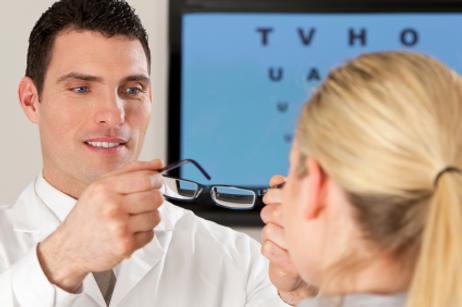
Once a patient receives a prescription for glasses or contacts from an optician or ophthalmologist, the dispensing optician is responsible for creating the eyewear for the patient's specific needs. This professional uses a host of diagnostic equipment to measure the cornea's thickness, width, and curvature to fit contact lenses precisely to the patient. In some cases, the dispensing optician will be responsible for cutting the lenses and placing them into the frames, and adding tinting or protective coating to the lenses themselves.

Once the eyewear is complete, the dispensing optician meets with the patient once again to ensure the glasses fit properly and make adjustments as needed. These employees might also help clients who need repairs to their glasses or educate them about appropriate care of their eyewear. Some also perform administrative duties, such as maintaining a database of customer prescriptions and tracking inventory and sales.

This video explains optician training.

. . .read more

Cursing in the Classroom: Professor Ousted for Swearing

Updated
|
Cursing in the Classroom: Professor Ousted for Swearing
In a Hawaii community college philosophy course, a professor used profanity to get students' attention and inspire independent thought, but the efforts may have backfired.

Philosophy courses are designed to make students think, challenge their beliefs and help them arrive at theories and dogmas that will support them throughout life. One professor in Hawaii uses a rather colorful means of jumpstarting the process in his philosophy courses at Hawaii Community College. He throws a few expletives into his first few lectures to get students to sit up and take notice – and think for themselves. However, his out-of-the-box teaching style may have lost him his job.

About the Professor

According to a report at Inside Higher Ed, Daniel Petersen has been teaching philosophy courses at Hawaii Community College and the University of Hawaii at Hilo for 21 years. He begins his classes with the phrase, "Shit happens," to introduce the idea of free will and determinism. Petersen says his approach grabs the student's attention in the first few moments of the class and tunes them into the subject matter so they engage more readily.

"I do what I do to wake students up," Petersen told the Star-Advertiser. "It makes them stand up and take notice. I know many of them are very religious. It makes them sit up and think a bit. But I've never sworn at a student." Petersen emphasizes that he has never directed his profanity directly at a student but has used a smattering of four-letter words in the context of his lectures for this precise purpose.

This video offers some ethical standards in

. . .read more

How the Gainful Employment Rule Pressures Community College

Updated
|
How the Gainful Employment Rule Pressures Community College
Learn how the Gainful Employment Rule affects community colleges, career training programs, and students considering workforce education in 2026.

Community colleges have seen a significant rise in enrollment in recent years, due in part to the need for retraining into careers that are more resilient and in demand. As waiting lists for some community college programs continue to grow, some students are turning to vocational, for-profit colleges to meet their academic needs in the interim. Unfortunately, certain rather unscrupulous practices by some for-profit institutions have resulted in federal regulations that also affect some career training programs offered by community colleges. If you're weighing the advantages of different types of institutions, our article on Community Colleges: Bigger Buck Bang than For-Profits offers a helpful comparison.

What is the Gainful Employment Rule?

While community colleges offer associate's degrees in a wide range of subjects, they also provide specific job training in particular fields that takes less time to complete. For-profit institutions also offer these training programs to help students get through school and into the workforce as quickly as possible. Unfortunately, some of these training programs have not offered the necessary preparation in fields that are hiring, leaving students without gainful employment and additional debt from their schooling that they cannot easily repay.

To address this concern, the U.S. Department of Education implemented the Gainful Employment Rule. Although the regulation has changed under different presidential administrations, its primary purpose remains the same: to discourage career colleges from providing misleading information about the employment prospects students can expect after completing their training. The rule is intended to hold

. . .read more

Balancing Perspectives: The Controversy of Bias in Religious Education

Updated
|
Balancing Perspectives: The Controversy of Bias in Religious Education
This article likely examines the controversy surrounding the teaching of Islamic studies by individuals with anti-Islamic views, discussing issues of academic freedom, religious education, and the importance of unbiased instruction in higher education.

It all started when Lane Community College in Oregon decided to offer a non-credit course titled "What is Islam?" The instructor of the course, Barry Sommer, had applied to teach a class in Islam for the community college, which the college accepted. However, before the course had a single sign-up, the college put the brakes on the offering. School officials learned some potentially disturbing facts about Sommer and decided it was best to nip the brewing controversy in the bud.

The Facts

Eugene resident Barry Sommer applied in October of this year to teach a class on Islam at Lane Community College. The school typically offers non-credit courses for interested students throughout the year, many of which are taught by qualified community residents rather than college professors. According to a report at World Net Daily, approval for the course came, and Sommer began preparations for teaching. When the course went online on the college website, Sommer also sent out a press release to alert others to his offering.

Once the details were announced, a local news station asked to interview Sommer. As the course became more public, so did Sommer's background. The Sommer may have been involved in organizations that were perceived as anti-Islamic. Once the news spread that Sommer was a potentially controversial figure in the Islamic community, Lane pulled the plug on the course.

This short video offers an overview of Islam.

. . .read more

Recent Articles

As Four-Year Colleges Enter Short-Term Training, Should You Still Choose a Community College?
As universities expand short-term workforce certificates, learn how community colleges compare on cost, flexibility, employer partnerships, and career outcomes.
What New Federal Aid Rules Mean for Short-Term Training Choices
Learn how new federal financial aid rules affect short-term workforce training programs and what prospective community college students should consider before enrolling.
Childcare, Transportation, and Food Support: Services That Drive Community College Completion
Learn how childcare, transportation, food assistance, and other basic needs services help community college students stay enrolled and graduate.