Updated
|
Careers: Marine Biologist
Combine underwater adventures with scientific discoveries and crystal blue waters, and you may have a dream career as a marine biologist. Learn about how you can start your marine biology training right at community college!

If you love the ocean and are fascinated with the creatures that live within its depths, a career in marine biology might be the right choice for you. While this career has traditionally required a minimum of a four-year degree to get your foot in the door, many community colleges are now offering marine biology programs - in addition to aquarium science ones - that allow students to land jobs as research assistants and other entry-level positions in much less time. This article will cover what the career of a marine biologist looks like and highlight some of the community college programs now available in this field of study.

What is Marine Biology?

According to the Bureau of Labor Statistics, marine biologists commit their careers to studying saltwater organisms, focusing on the molecular biology of the living cells in creatures living within saltwater bodies around the world. Marine biologists may also be referred to as oceanographers, scientists who study the physical characteristics of the ocean, as well as the ocean floor. The work of a marine biologist is typically done in the field or a laboratory rather than in an office setting.

Marine biologists usually have a minimum of a four-year degree in the biological sciences, and many pursue post-graduate work as well. However, thanks to the addition of marine biology programs at community colleges, students can now find entry-level work in marine biology in a much shorter period of time, gaining on-the-job

. . .read more

Careers: Solar Technician

Updated
|
Careers: Solar Technician
Solar technicians are in high demand, and you can energize your own career or solar business, starting with training at community college.

Solar energy may still make up a relatively small percentage of the energy used in this country, but federal, state, and local governments are offering significant incentives to promote the expansion of this industry. Today, solar photovoltaic installation has become a rapidly growing field, but the lack of training has made it difficult for some companies to find qualified professionals to handle the workload. Some community colleges around the company are now answering the call, providing solar technician training to prepare students for rewarding jobs in this field.

What is a Photovoltaic Installer?

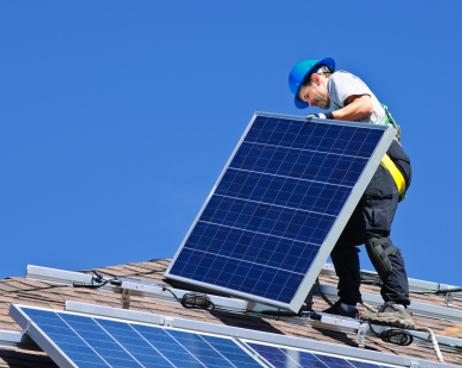
According to an article on the Bureau of Labor Statistics website, the American Solar Energy Society estimates that there were about 7,600 jobs in the solar energy industry in 2006. The majority of this number was photovoltaic installers, professionals who place solar panels on roofs to allow homeowners to capitalize on the sun's energy to heat and cool their homes.

There are many different types of solar panels today to accommodate for a wide range of shapes and sizes of buildings. Photovoltaic installers determine the best panel for the individual building and then install the panel and the additional components to get solar energy up and running for that structure.

Qualifications for photovoltaic installer positions begin with a high school diploma and usually continue with some sort of vocational training. People who begin their careers in the construction industry are often well suited for photovoltaic training because they are accustomed to the

. . .read more

New Study Finds Great Divide Between College Training and Real World

Updated
|
New Study Finds Great Divide Between College Training and Real World
How well are community colleges training their students for the real world? Learn about a new study that finds colleges are not training their students for jobs that are actually available, leaving their students in the "great divide" between graduation and the real world.

It would seem that in an economic environment where employers continue to report difficulty filling many skilled positions, they would have plenty of qualified prospects. However, employers are not finding applicants with the education and training necessary to move into many positions without extensive on-the-job training, something few employers can or want to afford. The result is a workforce in which many job seekers cannot secure available positions because they do not have the necessary preparation to transition into those jobs with ease. The really surprising part is that we are often talking about college graduates who are ill-equipped for many of the demands of today's professional world.

Training and the Economy

This concern was highlighted in the 2011 study conducted by Corporate Voices for Working Families and Civic Enterprises titled "Across the Great Divide." The study examined the relationship between the education students receive in college and the skills employers are looking for from college graduates. Although the report is more than a decade old, many of its findings continue to shape conversations about workforce development today.

The introduction to the study stated, "Many of those looking for work do not have the skills required by companies looking to hire, resulting in businesses seeking talent while many job seekers struggle to qualify." While today's labor market differs significantly from that of 2011, employers continue to emphasize the importance of aligning education with workforce needs. According to the U.S. Bureau of Labor Statistics Occupational Outlook

. . .read more

New Bachelor's Degrees Offered at Community Colleges

Updated
|
New Bachelor's Degrees Offered at Community Colleges
With more community colleges offering bachelor's degrees, the choices in getting a BA or BS are growing quickly. Learn about new bachelor's degrees you can obtain at community colleges, ranging from nursing to electrical engineering and every subject in between.

Community colleges have traditionally been focused on getting in, getting an associate degree in two years or less, and getting into the workforce as quickly as possible. Those who wanted to continue their education had to take on the headache of transferring all of their community college credits to a four-year institution. Today, a number of community colleges are offering bachelor's degrees to student who complete associate degrees and want to take their training and education to the next level - without leaving campus.

What's Different about Community College Bachelor's Degrees?

While many students are clamoring for a spot in a four-year community college program that costs much less than a similar degree from a nearby university, community colleges are stressing the point that they are not trying to be just like the four-year postsecondary institutions. First, most community colleges offering bachelor's degrees are doing so as an extension of their own associate degree programs. Students earn the associate degree first to become eligible to apply for the bachelor's program.

These bachelor's degrees will also differ from traditional university offerings because they will be limited to degree programs that can take students directly into the workforce. In keeping with the long-standing tradition of community colleges to raise up a new generation of work-ready adults, these programs are designed specifically with a profession in mind. Instead of offering liberal arts programs in political science or English, these bachelor's degrees will be in specific fields like

. . .read more

Careers: Glass Blowing

Updated
|
Careers: Glass Blowing
If mixing your creativity with beautiful glass sounds inspiring, consider starting your hobby or career in glass blowing at community college.

Are you looking for a whole new field of study at community college? Why not give glass blowing a try? This popular hobby is now being offered in courses at community colleges across the country. Whether you are looking for a profession as a glass blowing artisan or simply want to add another piping hot hobby to your repertoire, glass blowing might be the opportunity to let your inner artist shine. This article will explore the history and craft of glass blowing and provide a few samples of colleges that are offering formal training in this skill.

What is Glass Blowing?

According to Wise Geek, the history of glass blowing dates back to approximately 200 BCE. During those very early years, glass blowing was primarily used to create vessels to hold liquids. Through its long evolution, glass blowing has become an art form used for creating beautiful pieces that lovers of the craft can proudly display in their homes and office buildings.

The process of glass blowing requires very hot conditions, created by heating ash and limestone in a fiery furnace. The glass is heated to a molten state, where it can be molded and shaped into everything from large vessels to tiny detailed forms. The shaping takes place through a blowpipe that the artist blows into to form a bubble within the molten glass. Details can be added to the glass during the blowing process, using tweezers to pull and shape the glass into various

. . .read more

Recent Articles

As Four-Year Colleges Enter Short-Term Training, Should You Still Choose a Community College?
As universities expand short-term workforce certificates, learn how community colleges compare on cost, flexibility, employer partnerships, and career outcomes.
What New Federal Aid Rules Mean for Short-Term Training Choices
Learn how new federal financial aid rules affect short-term workforce training programs and what prospective community college students should consider before enrolling.
Childcare, Transportation, and Food Support: Services That Drive Community College Completion
Learn how childcare, transportation, food assistance, and other basic needs services help community college students stay enrolled and graduate.