Community College News

Stay abreast of all the news and reports impacting community colleges. This section covers the latest news stories, from campus protests to Wal-Mart partnerships. Read community college reactions to the latest State of the Union address, identify schools receiving big donations, and analyze the latest laws impacting community colleges and their students.

View the most popular articles in Community College News:

Gap Year Guide for Graduating Seniors | 2026 Update

Updated
|
Gap Year Guide for Graduating Seniors | 2026 Update
Updated insights for parents on gap years in 2026, covering trends, costs, deferrals, planning tips, and whether a gap year makes sense for your student.

Should Graduating Seniors Consider a Gap Year?

As graduating seniors and their families plan for the transition to college, careers, or other post-graduation paths, the idea of a gap year remains a compelling alternative to immediate enrollment. With evolving trends in higher education, rising costs, and shifting student goals in 2026, this article updates the key facts, risks, benefits, and practical considerations for parents helping their teens decide whether a gap year is right for them.

What Is a Gap Year?
A gap year is a planned period of purposeful activity taken between high school and college or other formal education. Activities vary widely, including travel, work, internships, volunteering, community service, or skill-building programs. While the practice is far more common in countries such as the United Kingdom or Australia, it has grown in awareness in the United States and is increasingly supported by some colleges and universities.

How Many Students Take a Gap Year?
Unlike college enrollment, there is no central federal data source that measures gap year participation in the U.S., but multiple indicators reflect current patterns. Estimates suggest that tens of thousands of U.S. students take gap years annually, with participation often returning to pre-pandemic levels after a brief spike during COVID-related disruptions. Survey data from a range of programs and high school counselors finds that roughly 2 to 3 percent of graduating seniors plan to take a gap year, with private schools reporting slightly higher rates than public schools.

Why Families Are
. . .read more

How to Build a Class Schedule That Fits Your Life (Spring 2026)

Updated
|
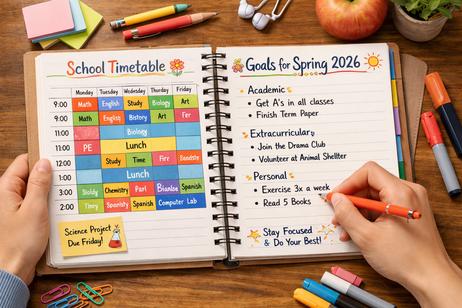
How to Build a Class Schedule That Fits Your Life (Spring 2026)
Learn how to build a class schedule that fits your life with expert tips, updated strategies for Spring 2026, and practical planning tools for students and families.

How to Build a Class Schedule That Fits Your Life (Spring 2026 Edition)

Creating a class schedule is one of the most important academic planning tasks students face each year. The process of how to build a class schedule that fits your life has changed in subtle but meaningful ways for Spring 2026, with new advising tools, hybrid learning options, and a renewed focus on wellness and balance. Whether you are a high school student planning electives, a college student navigating degree requirements, or a parent helping your child plan a pathway to success, this guide provides clear, expert-backed strategies for how to build a class schedule that fits your life without stress.

In this Spring 2026 edition, we emphasize strategies that meet modern challenges such as balancing part‑time work, mental health breaks, family commitments, and evolving academic goals. We break down key steps, practical checklists, and expert tips to help you successfully build a class schedule that fits your life.

Why It Matters: The Purpose of a Well‑Built Schedule

When you learn how to build a class schedule that fits your life, you are doing more than picking classes. You are:

  • Aligning coursework with academic goals.

  • Protecting time for rest, extracurriculars, and work.

  • Avoiding burnout and schedule conflicts.

  • Enhancing focus and long‑term success.

A schedule that fits your life can

. . .read more

Top 10 Jobs for Community College Graduates in 2026

Updated
|
Top 10 Jobs for Community College Graduates in 2026
Meta Description: Discover high-demand jobs for community college graduates, with current salary trends, costs, and career pathways.

10 In-Demand Jobs for Community College Graduates

Community colleges continue to provide an affordable, flexible pathway to careers that are in high demand. With tuition averaging significantly less than four-year institutions, students can enter the workforce with minimal debt while gaining practical skills. For parents and students planning ahead, understanding current trends, costs, and job prospects can guide decisions about admissions, course selection, and career planning.

1. Registered Nurse (RN)

Registered nurses are consistently in demand due to ongoing healthcare needs. Many RNs earn an associate degree in nursing (ADN) from community colleges, which typically takes two years. According to the U.S. Bureau of Labor Statistics, RNs earn a median annual salary of $79,600, with job growth projected at 6% through 2031.

Admissions and Planning: ADN programs require prerequisites such as biology and chemistry, and competitive programs often have early application deadlines, typically in the fall for the following academic year. Parents should help students prepare by ensuring strong performance in science courses and timely submission of applications.

2. Dental Hygienist

Dental hygienists perform preventive dental care and patient education. Community college programs for dental hygiene usually last two years and include clinical practice. Median annual salaries are around $77,000, with a projected 11% job growth through 2031.

Costs and Access: Tuition varies, with many programs costing between $6,000 and $18,000 per year for in-state students. Scholarships and federal financial aid can offset costs. Parents should consider local programs and clinical

. . .read more

First-Generation Student Guide to Community College Success

Updated
|
First-Generation Student Guide to Community College Success
A first-generation student guide to navigating your first semester at community college, with academic, financial, and campus life strategies.

First-Generation Student Guide: Navigating Your First Semester at Community College

Starting college is a major milestone. For first-generation students, it can feel especially complex. This first-generation student guide is designed to help students and families understand what to expect during the first semester at community college, how to prepare effectively, and how to use available support systems with confidence.

A first-generation student guide matters because students whose parents did not complete a four-year degree often enter college without informal knowledge about higher education systems. Community colleges serve nearly half of all first-generation undergraduates in the United States, according to recent enrollment trends, making this first-generation student guide particularly relevant in 2026.

This first-generation student guide focuses on practical steps, academic habits, financial planning, and campus engagement strategies that support a strong start.

Understanding What It Means to Be a First-Generation College Student

A first-generation college student is typically defined as a student whose parents or guardians did not earn a bachelor’s degree. This first-generation student guide emphasizes that this status is not a disadvantage. Instead, it reflects resilience, motivation, and the ability to navigate new systems successfully.

Community colleges are uniquely positioned to support first-generation students. Smaller class sizes, flexible schedules, and wraparound services make them an ideal starting point. This first-generation student guide highlights how to take advantage of those features from the first week of classes.

Preparing Before the Semester Begins

Early preparation sets the tone

. . .read more

Most In-Demand Community College Majors for 2025–26

Updated
|
Most In-Demand Community College Majors for 2025–26
Explore the most in-demand community college majors for 2025–26 workforce needs, aligned with hiring trends, wages, and transfer pathways.

Most In-Demand Community College Majors for 2025–26 Workforce Needs

Community colleges sit at the center of America’s workforce pipeline. As industries adapt to automation, healthcare demand, climate priorities, and digital transformation, the most in-demand community college majors are shifting in clear and measurable ways. For the 2025–26 academic year, students and families are increasingly focused on programs that offer strong job placement, stackable credentials, and pathways to bachelor’s degrees.

This guide examines the most in-demand community college majors for 2025–26 workforce needs, drawing on labor projections, employer hiring trends, and enrollment data. It is designed to help students, parents, and educators understand where opportunity is strongest and how community colleges are responding.

Why In-Demand Community College Majors Matter More Than Ever

Rising tuition costs and uncertain labor markets have made return on investment a central concern. The most in-demand community college majors provide a practical solution. These programs typically combine lower tuition, shorter completion timelines, and strong alignment with regional workforce needs.

According to the U.S. Bureau of Labor Statistics, many of the fastest-growing occupations over the next decade require postsecondary credentials but not a four-year degree, making community college pathways especially relevant for 2025–26 workforce needs. Community colleges are also expanding employer partnerships and work-based learning, further strengthening the value of these majors.

Key Criteria Used to Identify the Most In-Demand Community College Majors

To determine the most in-demand community college majors for 2025–26 workforce needs, several factors

. . .read more

Recent Articles

As Four-Year Colleges Enter Short-Term Training, Should You Still Choose a Community College?
As universities expand short-term workforce certificates, learn how community colleges compare on cost, flexibility, employer partnerships, and career outcomes.
What New Federal Aid Rules Mean for Short-Term Training Choices
Learn how new federal financial aid rules affect short-term workforce training programs and what prospective community college students should consider before enrolling.
Childcare, Transportation, and Food Support: Services That Drive Community College Completion
Learn how childcare, transportation, food assistance, and other basic needs services help community college students stay enrolled and graduate.