Choosing a School

Whether you are a high school student, an adult student, or someone looking for retraining, we have all the resources you need to make an educated choice about the right community college for you. We’ll compare community colleges to other institutions of higher education, explore college rankings and the accreditation system, and provide useful tips to ensure your community college credits transfer easily.

View the most popular articles in Choosing a School:

California: More Accreditation Woes for Community Colleges

Updated
|
California: More Accreditation Woes for Community Colleges
The chancellor of the California Community College System, Bryce Harris, recently stated more than 20 community colleges in the state were at risk of losing accreditation. In the midst of problems with City College of San Francisco, some are beginning to question the credibility of the accreditors.
City College of San Francisco is one of several campuses at risk of losing accreditation.

As City College of San Francisco fights to remain open after the current school year, others are beginning to question the validity of an accrediting agency threatening the very existence of vital California community colleges. Scrutiny and even lawsuits leave the accrediting agency vulnerable while other California schools struggle to realize their accreditation may be the next on the line. How will this growing problem eventually be resolved?

More California Schools Heading to the Chopping Block?

The chancellor of the California Community College System, Bryce Harris, recently stated in the San Francisco Business Times that the possible de-accreditation of City College of San Francisco might be just the tip of the iceberg. Harris told the Business Times that as many as 20 California schools could face accreditation challenges in the future. While Harris did not name specific school names in his warning, he admitted that City College's problems could plague many other schools in the state.

In July, the Accrediting Commission for Community and Junior Colleges (ACCJC) announced it would pull City College’s accreditation at the end of the current academic year 2014. The commission cited several reasons for the decision, including a confusing governance structure and lack of financial accountability. Other factors that led to the action by the commission included support services, facilities, and teaching standards that were not compliant with the commission’s requirements in these areas.

As one solution to the problem, Harris has asked the state government for more
. . .read more

Washington Monthly Rates Community Colleges in 2013 Ranking

Updated
|
Washington Monthly Rates Community Colleges in 2013 Ranking
We take a look at the latest annual college rankings from Washington Monthly, which provide a list of the top community colleges in the country as well as four-year schools.
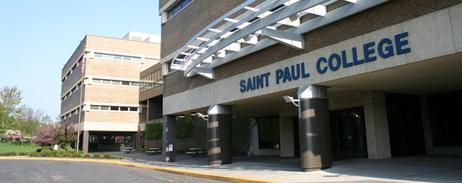
St. Paul College in Minnesota wins the top spot for community colleges

The rankings are out from Washington Monthly, giving prospective students and their parents a snapshot of some of the top-performing community colleges in the country for 2013. This publication is one of the few that includes community colleges in their overall rankings of postsecondary institutions. In addition, the publication uses slightly different criteria for ranking schools, which may make this list noteworthy to those trying to gain a complete picture of a community college before shelling out that first tuition payment.

Unique Metrics Set New Rankings Apart

According to the Christian Science Monitor, one of the factors that sets the Washington Monthly rankings apart from the rest is the somewhat unique metrics used to rate colleges. Instead of focusing merely on admission difficulty and reputation, this ranking system uses criteria like commitment to research and service, and social mobility. The publication also includes a “best bang for your buck” category for four-year schools that ranks them according to the price paid for a degree vs. what graduates can expect to get back in return.

The fact that Washington Monthly provides a ranking of community colleges also sets this annual list apart from the rest. Although two out of every five college students opt for community college after high school, few ranking systems provide this type of information for these schools. However, as community colleges continue to increase in popularity among high school graduates and working adults alike, the need for this type of information grows

. . .read more

What Schools Were the Top Degree Producers Last Year?

Updated
|
What Schools Were the Top Degree Producers Last Year?
Check out the latest rankings by Community College Times that shows the community colleges that were the top degree producers in the country last year.

The rankings are in for this year’s analysis of the top degree-producing community colleges by Community College Week. In addition to listing the top 100 schools, researchers also discovered that the overall number of associate degrees earned made a jump this year to the top one million for the first time in history. Some schools that contributed significantly to this total are now celebrating their accomplishments with recognition in the rankings.

How States Fared

The latest analysis also looked at the number of associate degrees by state. That total number was weighed against the total population in the state to get a more accurate idea of the percentage of state residents earning degrees or certifications from community colleges. While states with larger populations also tended to issue more associate degrees, some states turned out more community college graduates as a percentage of their total population than others.

California had the most associate degrees during the 2011-2012 academic year, with 114,612 degrees awarded. California also boasts one of the country's largest overall populations and the largest community college system in the U.S. However, the second biggest degree-producing state was Florida, even though that state ranked fourth in overall population.

Other states that ranked in the top 10 in terms of degree productions included:

The smallest number of associate degrees was earned in Vermont, where just 1,196 two-year degrees were

. . .read more

City College Of San Francisco Faces Accreditation Loss, Shut-Down

Updated
|
City College Of San Francisco Faces Accreditation Loss, Shut-Down
We report on the latest developments at City College of San Francisco that have resulted in the school’s loss of accreditation and impending shut-down.

The largest community college in California is destined to meet a dire fate one year from now if heroic efforts to save the school are not successful. City College of San Francisco was recently notified by the Accrediting Commission for Community and Junior Colleges that it will lose accreditation by July 31, 2014. Although the school has few options left, extreme moves are in the works that could be the last hope for saving the failing school.

11 of 14 Changes Go Unaddressed

Problems for City College date far beyond the recent announcement of accreditation loss. San Francisco Gate reported that the commission evaluated the school in 2012, and made 14 recommendations for improvements that would save the school's accreditation status. Those 14 recommendations included:

  • A revised mission statement for the school
  • Use of the mission statement to allocate resources, with an increase in reserves
  • An assessment of the college’s effectiveness
  • Evaluations of all staff members responsible for student success
  • Determination of whether there is sufficient staff to ensure student success
  • Identification of priorities in-class curriculum and effectiveness of current courses and programs
  • Assessment of whether student support services are hitting the mark
  • Development of an effective planning process
  • Leadership training for all staff and faculty members
  • Reporting of financial information through a timely, accurate process
  • Inclusion of building operating costs in long-term financial planning
  • Development of a plan for maintaining and updating information systems
  • Improvement of a governance structure for more efficient decision-making
  • Adherence to bylaws and policies by college trustees

In this video, California

. . .read more

Low Standards Mean Higher Failure Rates at Community Colleges

Updated
|
Low Standards Mean Higher Failure Rates at Community Colleges
We look at a recent study by the National Center on Education and the Economy that indicates standards are too low at community colleges today. That low bar results in a high failure rate in the job market.

Disturbingly low standards at community colleges nationwide translate to lower chances of success in the job market after college, a new study finds. Researchers discovered that although community college instructors appear to be lowering the bar for first-year students, many were unable to even meet the lower academic standards in math and literacy. This dismal picture suggests multiple layers of reform may be necessary to ensure students are ready for the professional workforce at graduation time.

Report Gauges College and Career Readiness

The new report, titled, “What does it Really Mean to be College and Work Ready?” was compiled by the National Center on Education and the Economy. The non-profit groups studies academic standards, instructional systems and assessment. Researchers looked at seven community colleges in seven states, looking at tests, textbooks and assignments given to first-year college students. Colleges were chosen at random and school size ranged from 3,000 to 30,000 students, according to Inside Higher Ed.

The study focused on popular career training programs offered by community colleges across the country, including accounting and business, automotive technology, criminal justice, early childhood education and information technology. Researchers focused on first-year students in these programs, and focus was placed on reading, writing and mathematics skills necessary to master these early college courses.

Lower Standards Still Not Met by Many Students

Researchers discovered that the bar set by college instructors in first-year courses was fairly low in terms of both reading and writing expectations. However,

. . .read more

Recent Articles

As Four-Year Colleges Enter Short-Term Training, Should You Still Choose a Community College?
As universities expand short-term workforce certificates, learn how community colleges compare on cost, flexibility, employer partnerships, and career outcomes.
What New Federal Aid Rules Mean for Short-Term Training Choices
Learn how new federal financial aid rules affect short-term workforce training programs and what prospective community college students should consider before enrolling.
Childcare, Transportation, and Food Support: Services That Drive Community College Completion
Learn how childcare, transportation, food assistance, and other basic needs services help community college students stay enrolled and graduate.

Choosing a School

GETTING STARTED
This section provides an in depth look at choosing the right community college. We’ll cover the reasons why community college is a good choice and the best steps to take when making your decision. Find tips and resources to aid in your search for the perfect school.
COMMUNITY VS. OTHER COLLEGES
With so many higher education options, we compare community colleges against other institutions to help you find the best option for your needs. We’ll look at how community colleges are outperforming 4-year schools, study the latest data on the ROI of community colleges and explore why more students are turning to them.
COLLEGE RANKINGS & ACCREDITATION
Are you attending one of the best community colleges? Do rankings matter? From the best schools in the US to those losing accreditation, we’ll provide you with the latest resources on community college rankings.
TRANSFER PROCESS
Many community college students transfer to four-year institutions. Be prepared to make a swift and easy transfer with these articles. Determine the most transfer-friendly universities, learn why some 4-year schools are limiting transfer students, and get tips on ensuring your credits go with you.